What Is Self-Love? (And How to Practice It in Real Life). Self-love is often misunderstood.
People think it means being selfish.
Or confident all the time.
Or posting motivational quotes and “choosing yourself” loudly.
But real self-love is much quieter than that.
It’s how you talk to yourself when no one is listening.
It’s how you treat yourself when you fail.
And it’s how safe you feel inside your own mind.
If you’ve ever searched
“what is self love” or “how to practice self love”,
this post is for you.
Not because you’re lacking something —
but because you’re human.
Self-love is not a personality trait.
It’s a practice.
This guide will help you understand the true self love meaning, why it matters so deeply for mental health, and how to practice self love in real life, especially if you’re a beginner.
What This Article Will Help You Understand
- What self-love really means (without clichés)
- Why self-love is important for mental health
- Common myths about self-love
- Signs you may be lacking self-love
- How to practice self-love in daily life
- Self-love for beginners (simple, realistic steps)

What Is Self-Love?
Self-love means treating yourself with the same respect, care, and understanding that you would offer someone you deeply love.
It does not mean:
- Thinking you’re better than others
- Ignoring your flaws
- Always feeling confident
- Being positive all the time
Self-love means:
- Accepting yourself as a work in progress
- Setting boundaries to protect your peace
- Speaking to yourself with kindness
- Taking responsibility without self-hatred
In simple words,
self-love is feeling emotionally safe with yourself.
Why Is Self-Love So Important?
Without self-love:
- You overthink constantly
- You seek validation from others
- You tolerate unhealthy relationships
- You feel emotionally exhausted
- Your mental health slowly declines
With self-love:
- You make calmer decisions
- You respect your limits
- You recover faster from emotional pain
- You build healthier relationships
- You feel more grounded inside
Self-love is not a luxury.
It’s emotional survival.
Self-Love Meaning (In Real Life, Not Quotes)
In real life, self-love looks like:
- Resting without guilt
- Saying “no” without explaining yourself
- Leaving situations that drain you
- Apologizing to yourself for being too hard on yourself
- Choosing peace over proving a point
Self-love is not loud confidence.
It’s quiet self-respect.
Common Myths About Self-Love
Many people struggle with self-love because of these myths:
“Self-love means being selfish”
“If I loved myself, I wouldn’t feel insecure”
“Self-love means I must be happy all the time”
“I’ll practice self-love once I improve myself”
Truth:
Self-love includes insecurity.
It includes bad days.
It includes growth without self-hate.
Signs You May Be Lacking Self-Love
You might struggle with self-love if you:
- Constantly criticize yourself
- Feel guilty for resting
- Stay in unhealthy relationships
- Overthink small mistakes
- Feel “not good enough” often
- Seek validation to feel worthy
These signs don’t mean you’re broken.
They mean you’ve never been taught how to love yourself properly.
Self-Love vs Selfishness (Important Difference)
| Self-Love | Selfishness |
|---|---|
| Respects your needs | Ignores others |
| Sets healthy boundaries | Controls situations |
| Cares without harming | Takes without care |
| Protects mental health | Disregards impact |
| Builds balance | Creates imbalance |
Self-love is about balance, not ego.
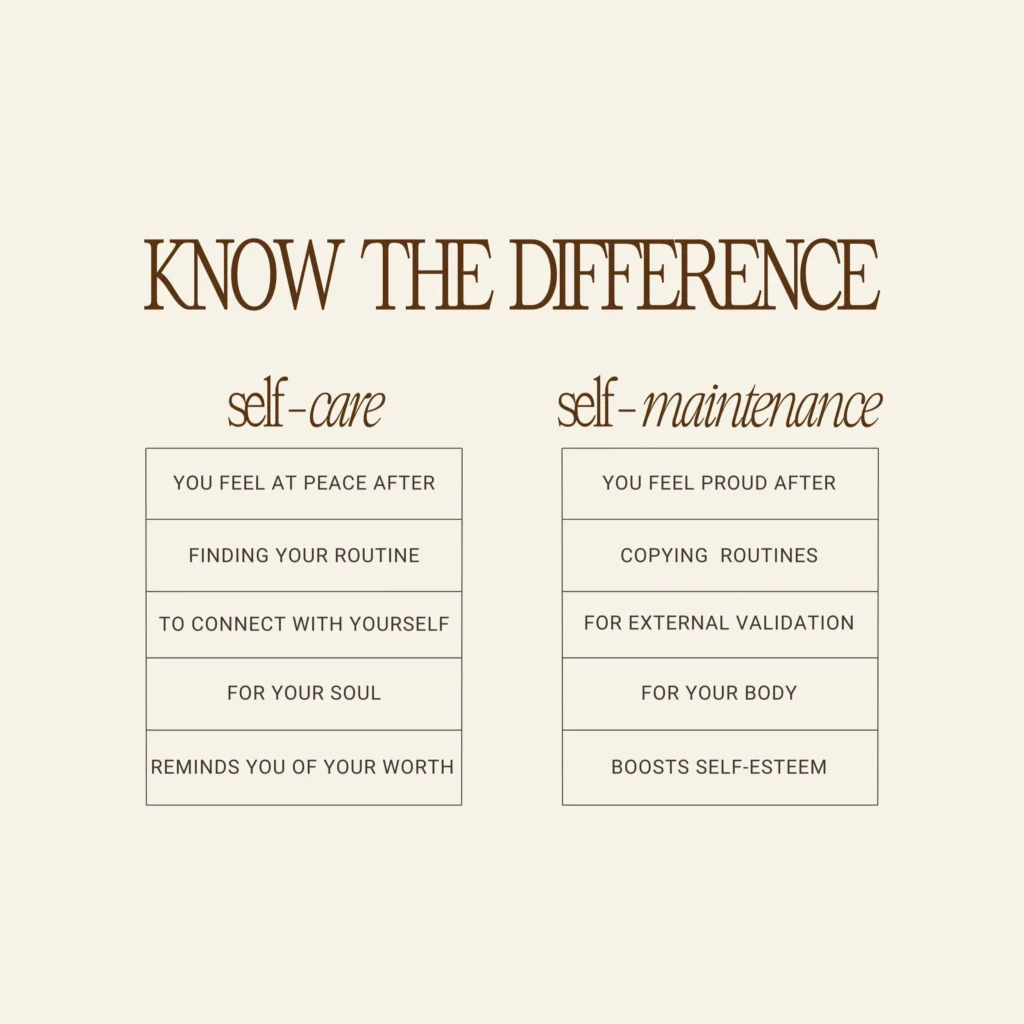
How to Practice Self-Love in Real Life
This is where self-love becomes practical.
1) Change How You Talk to Yourself
Your inner voice matters.
Instead of:
“Why am I like this?”
Try:
“I’m struggling — and that’s okay.”
Self-love starts with self-compassion, not motivation.
2) Set Boundaries Without Guilt
Self-love means:
- Saying no when you’re exhausted
- Not explaining every decision
- Choosing your mental health over approval
Boundaries are not rejection.
They are self-respect.
3)Stop Abandoning Yourself for Others
Ask yourself:
“Am I betraying myself to keep others comfortable?”
Self-love means you don’t disappear to be loved.
4) Take Care of Your Body Gently
Self-love is not extreme discipline.
It’s:
- Sleeping enough
- Eating regularly
- Moving your body kindly
- Resting when tired
Your body is not a problem to fix.
5)Allow Imperfection
Self-love doesn’t wait for improvement.
It says:
“I’m worthy even while growing.”
Progress without self-love leads to burnout.
Self-Love for Beginners (Simple Daily Practices)
If self-love feels difficult, start small.
Here are beginner-friendly practices:
| Practice | Why It Helps |
|---|---|
| One kind thought daily | Changes inner dialogue |
| Rest without guilt | Calms nervous system |
| Journaling feelings | Builds self-awareness |
| Saying no once | Builds boundaries |
| Limiting self-criticism | Reduces anxiety |
Self-love grows through consistency, not intensity.
A Real-Life Self-Love Moment
Someone may wake up feeling anxious and unmotivated.
Instead of forcing productivity,
they choose rest, gentle movement, and honesty.
That’s self-love.
Not dramatic.
Not perfect.
Just kind.
How Self-Love Improves Mental Health
Practicing self-love helps:
- Reduce anxiety
- Calm overthinking
- Improve self-esteem
- Heal emotional wounds
- Build emotional resilience
When you feel safe with yourself,
the world feels less threatening.
Why Self-Love Feels Hard at First
Self-love can feel uncomfortable because:
- You’re used to self-criticism
- You associate worth with productivity
- You were taught to ignore your needs
- Rest feels unfamiliar
Discomfort doesn’t mean you’re doing it wrong.
It means you’re doing something new.

Frequently Asked Questions About Self-Love
What is self-love in simple words?
Self-love is treating yourself with kindness, respect, and understanding.
How do I practice self-love daily?
Through kind self-talk, boundaries, rest, and emotional honesty.
Is self-love selfish?
No. Self-love helps you show up healthier for others.
Can self-love reduce anxiety?
Yes. Self-love creates emotional safety, which calms anxiety.
Is self-love a skill or feeling?
It’s a skill — learned through daily practice.
You Can Also Refer (Helpful Videos)
You may find these helpful:
- What Self-Love Really Means (Psychology Explained)
- How to Practice Self-Love Without Feeling Selfish
You Can Also Refer (Trusted Reading)
For deeper understanding:
You May Also Like (Related Reads)
- Why You Feel Lonely Even in a Relationship
- Why Relationships Trigger Anxiety, Overthinking, and Insecurity
- How to Heal After a Breakup (Emotionally, Not Just Moving On)
Final Thoughts
Self-love is not about becoming someone new.
It’s about coming back to yourself.
You don’t need to earn rest.
You don’t need to prove worth.
You don’t need to be perfect to be kind to yourself.
Start where you are.
Practice gently.
And remember —
Self-love is not selfish.
It’s necessary