Why Do I Overthink Everything? Do you analyze every conversation after it ends?
Do small decisions feel heavy in your mind?
Do you replay situations again and again, wondering what you should have said or done?
If you’ve ever asked yourself,
“Why do I overthink everything?”
this post is for you.
You’re not weak.
You’re not broken.
And you’re not alone.
Overthinking is one of the most common mental struggles today — especially among thoughtful, sensitive, and responsible people. This guide will help you understand why you overthink everything, recognize the signs, and learn how to stop overthinking naturally.
Table of Contents
- Why Do I Overthink Everything?
- What Is Overthinking, Really?
- What Causes Chronic Overthinking?
- Is Overthinking a Mental Disorder?
- Why Does My Brain Never Stop Thinking?
- Why Do I Overthink Small Things?
- Is Overthinking Linked to Anxiety or Depression?
- Can Overthinking Damage Mental Health?
- Common Signs You Are an Overthinker
- How to Stop Overthinking Naturally
- How to Train Your Brain to Stop Overthinking
- Simple Daily Habits That Reduce Overthinking
- FAQs
- Final Thoughts

Why Do I Overthink Everything?
Overthinking happens when your mind repeatedly analyzes thoughts, situations, or possibilities without reaching peace or resolution.
You may overthink:
- Past conversations
- Future outcomes
- Small mistakes
- Other people’s opinions
- Decisions that are already made
Overthinking often feels like trying to protect yourself, but it ends up exhausting you instead.
What Is Overthinking, Really?
Overthinking is not deep thinking.
Deep thinking leads to clarity.
Overthinking leads to confusion and stress.
Overthinking is a mental loop where:
- The same thoughts repeat
- The mind searches for certainty
- Anxiety increases instead of decreasing
It’s your brain trying to gain control — but going too far.
What Causes Chronic Overthinking?
Chronic overthinking doesn’t happen without reason.
Some of the most common causes include:
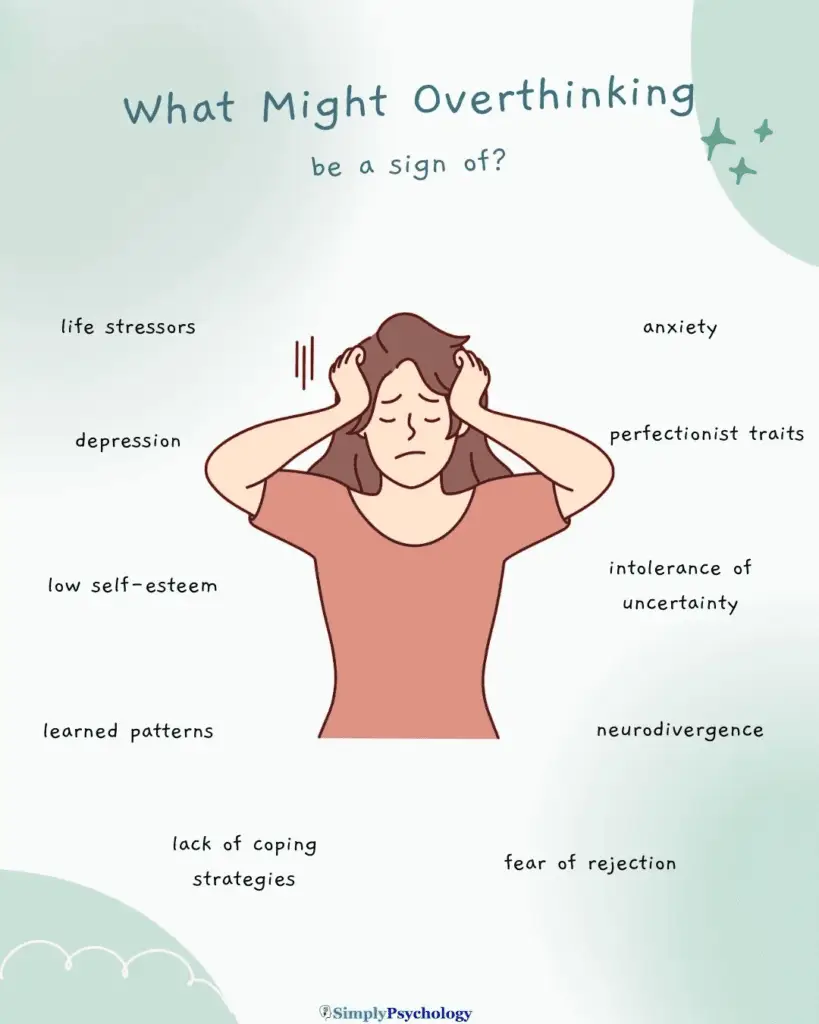
- Anxiety and constant worry
- Fear of making mistakes
- Past emotional experiences
- Perfectionism
- Low self-trust
- Growing up in a critical environment
- Suppressing emotions instead of expressing them
Overthinking often begins as a coping mechanism — especially in people who learned to stay alert to avoid emotional pain.
Is Overthinking a Mental Disorder?
No. Overthinking itself is not a mental disorder.
However, it is often linked to conditions like:
- Anxiety disorders
- Depression
- OCD tendencies
- Chronic stress
You can overthink without having a mental illness.
But unmanaged overthinking can contribute to mental health struggles over time.
Why Does My Brain Never Stop Thinking?
Your brain doesn’t stop because it hasn’t learned when to rest.
Common reasons include:
- Constant mental stimulation (phones, screens, noise)
- Lack of emotional processing
- Stress hormones staying active
- Fear of silence or stillness
A busy mind is often a tired mind — not a productive one.
Why Do I Overthink Small Things?
Small things feel big when:
- You care deeply
- You fear judgment
- You doubt yourself
- You want to avoid regret
Overthinking small things is often about emotional safety, not logic.
Your mind says:
“If I analyze this enough, I won’t get hurt.”
But in reality, it only creates more stress.
Is Overthinking Linked to Anxiety or Depression?
Yes — very often.
- Anxiety fuels future-based overthinking
- Depression fuels past-based overthinking
This is why some people:
- Worry constantly about what might happen
- Replay old mistakes repeatedly
- Feel mentally tired even when resting
Overthinking and emotional health are deeply connected.
Can Overthinking Damage Mental Health?
When overthinking becomes constant, it can lead to:
- Mental exhaustion
- Sleep problems
- Increased anxiety
- Low mood
- Difficulty making decisions
- Reduced confidence
Overthinking doesn’t mean you’re weak — it means your mind needs support, not pressure.
Common Signs You Are an Overthinker
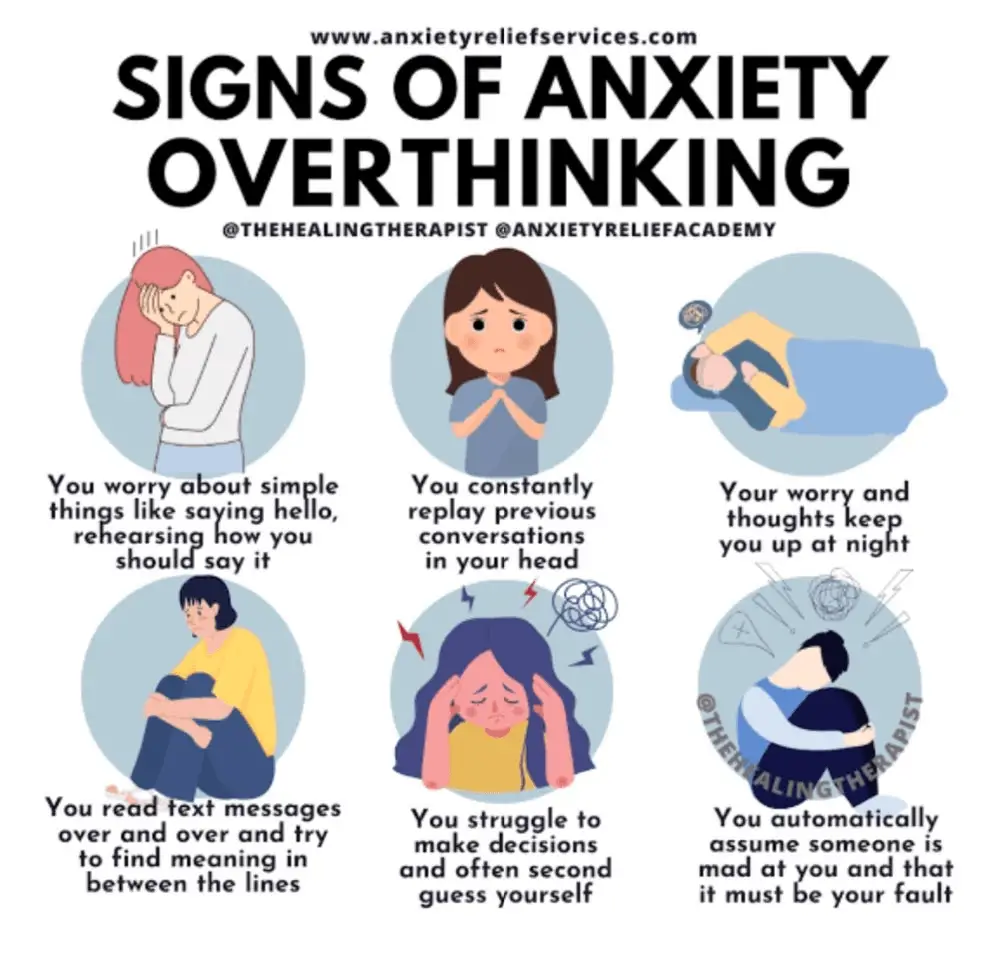
You may be an overthinker if you:
- Replay conversations often
- Struggle to make decisions
- Worry about things beyond your control
- Feel mentally tired most days
- Overanalyze people’s reactions
- Have trouble relaxing
Recognizing this is the first step toward change.
How to Stop Overthinking Naturally
Here are simple, effective ways to calm an overthinking mind.
1. Write Your Thoughts Down
Writing clears mental clutter.
It tells your brain:
“I don’t need to hold this right now.”
2. Limit “What If” Questions
Replace:
“What if something goes wrong?”
With:
“I’ll handle it if it happens.”
3. Ground Yourself in the Present
Ask:
- What can I see?
- What can I hear?
- What can I feel?
This breaks the overthinking loop.
4. Accept Uncertainty
Peace doesn’t come from certainty.
It comes from self-trust.
How to Train Your Brain to Stop Overthinking
Overthinking is a habit — and habits can change.
Train your brain by:
- Practicing mindfulness daily
- Reducing mental multitasking
- Allowing emotions instead of suppressing them
- Creating quiet time without screens
- Being kinder to yourself
Consistency slowly rewires thought patterns.
Simple Daily Habits That Reduce Overthinking
| Habit | Why It Helps |
|---|---|
| Journaling | Releases mental load |
| Exercise | Reduces stress hormones |
| Limiting screen time | Calms the nervous system |
| Deep breathing | Slows racing thoughts |
| Gratitude practice | Shifts focus |
Small habits make a big difference over time.

Why do I overthink everything all the time?
Because your mind is trying to protect you from uncertainty or emotional pain.
Can overthinking ever be stopped completely?
It may not disappear entirely, but it can become much quieter and manageable.
Is overthinking a sign of intelligence?
Overthinking is more about sensitivity and awareness than intelligence.
Does overthinking mean something is wrong with me?
No. It means your mind needs rest, reassurance, and support.
How long does it take to reduce overthinking?
With daily practice, many people notice improvement within a few weeks.
Helpful YouTube Resource
Search on YouTube:
(Add one or two trusted guided meditation videos here)
Related Reads
- How to Stop Overthinking at Night
- Why Does My Mind Race When I Try to Sleep?
- Nighttime Anxiety: Causes and Solutions
Final Thoughts
If you overthink everything, it doesn’t mean you’re weak.
It means you care deeply, feel intensely, and think a lot.
The goal is not to stop thinking —
but to stop letting thoughts control your peace.
Be patient with your mind.
It’s been trying to protect you for a long time.
And now, it’s time to teach it how to rest.