why does my mind race when I try to sleep
Do you feel exhausted all day, but the moment you lie down, your mind suddenly wakes up?
Thoughts start racing.
Worries appear out of nowhere.
And sleep feels impossible — even though your body is tired.
If this happens to you, you’re not imagining it.
And you’re not alone.
A racing mind at night is one of the most common reasons people struggle with sleep today. This guide will help you understand why your mind races when you try to sleep and what you can do to calm it naturally.
Table of Contents
- Why Does My Mind Race When I Try to Sleep?
- Common Causes of Racing Thoughts at Night
- Is a Racing Mind at Night Anxiety?
- Can Overthinking Cause Sleep Problems?
- How to Calm a Racing Mind Before Sleep
- The 3:2:1 Rule for Nighttime Overthinking
- The 4-Word Sleep Phrase That Helps
- How to Train Your Brain to Slow Down at Night
- Signs Your Racing Mind Is Caused by Stress
- Simple Night Routine to Quiet Your Mind
- FAQs
- Final Thoughts
Why Does My Mind Race When I Try to Sleep?
During the day, your mind is distracted by work, people, noise, and responsibilities.
At night, everything becomes quiet — and your thoughts finally get space.
This is why racing thoughts before sleep are so common.
Your mind isn’t trying to harm you.
It’s trying to process unfinished thoughts, emotions, and worries.
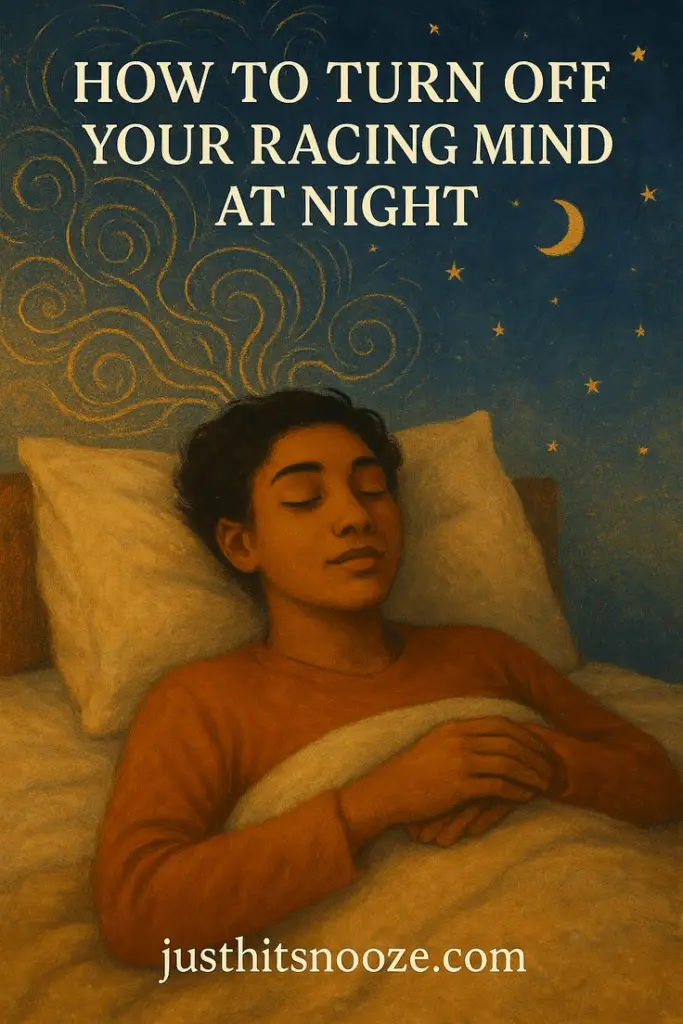
Common Causes of Racing Thoughts at Night
Here are the most common reasons your mind races when you try to sleep:
- Overthinking unresolved problems
- Anxiety and stress buildup during the day
- Fear of the future or regret about the past
- Irregular sleep schedule
- Too much screen time before bed
- Suppressed emotions coming up at night
When your brain doesn’t get time to slow down during the day, it does it at night — whether you want it to or not.
Is a Racing Mind at Night Anxiety?
In many cases, yes.
Nighttime racing thoughts are often a sign of nighttime anxiety.
Anxiety doesn’t always show up as panic attacks. Sometimes it looks like:
- Replaying conversations
- Worrying about tomorrow
- Imagining worst-case scenarios
- Feeling restless even when tired
At night, anxiety becomes louder because there are fewer distractions to quiet it.
Can Overthinking Cause Sleep Problems?
Absolutely.
Overthinking and sleep problems are deeply connected.
When your mind keeps analyzing, worrying, or replaying thoughts:
- Your nervous system stays alert
- Stress hormones remain active
- Your body doesn’t enter sleep mode
This is why many people feel:
- “My body is tired, but my mind won’t stop”
- “I’m exhausted but can’t fall asleep”
- “The moment I lie down, my thoughts start racing”
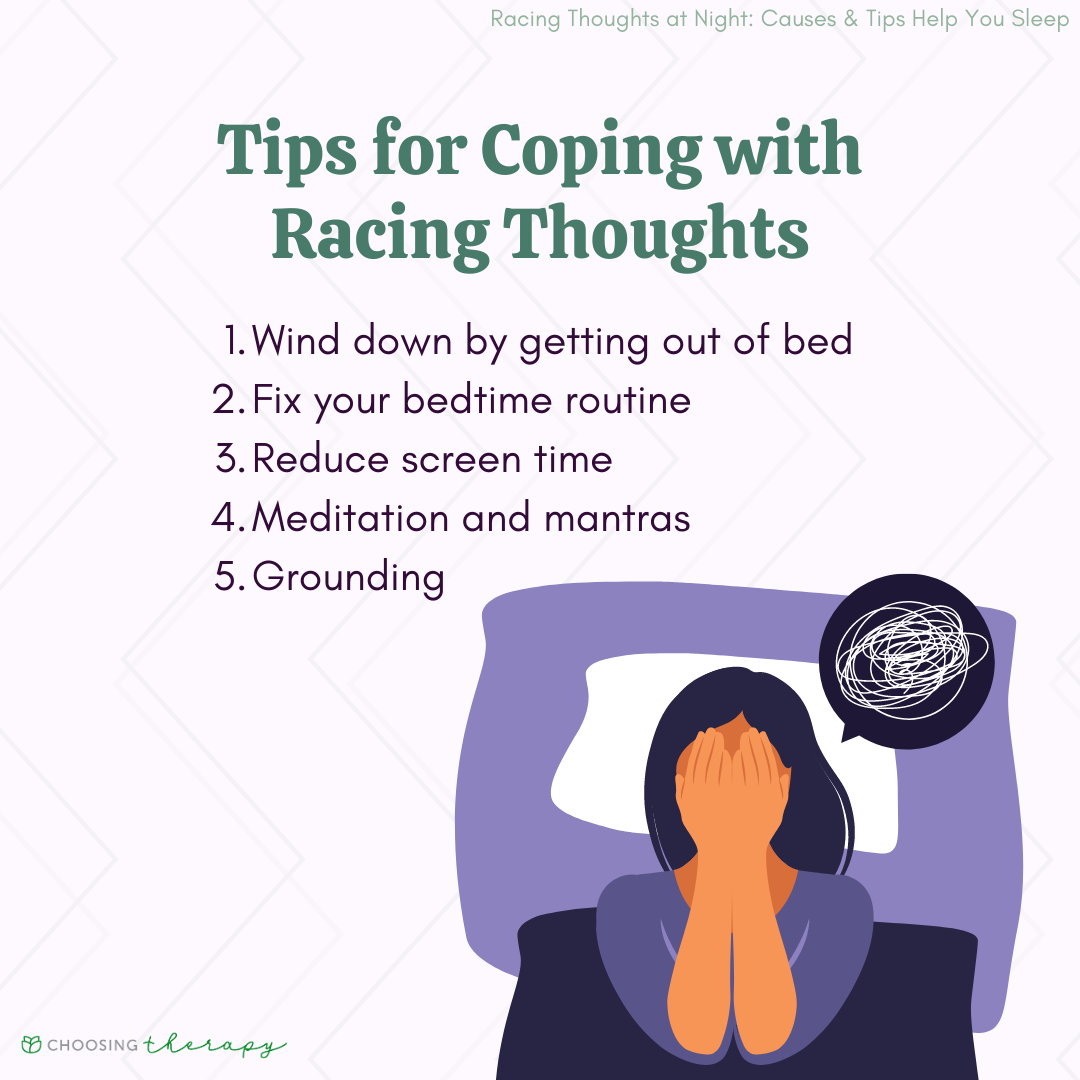
How to Calm a Racing Mind Before Sleep
Here are simple but effective ways to calm your mind at night.
1. Write Down Your Thoughts (Brain Dump)
Before bed, write everything on your mind:
- Worries
- Tasks
- Random thoughts
This tells your brain:
“I don’t need to think about this right now.”
2. Slow Your Breathing
Try this breathing pattern:
- Inhale for 4 seconds
- Exhale for 6 seconds
- Repeat for 5 minutes
Slow breathing reduces anxiety and signals your body that it’s safe to rest.
3. Don’t Try to Force Sleep
The more you try to sleep, the harder it becomes.
Instead of saying:
“I must sleep now”
Say:
“It’s okay to rest. Sleep will come.”
This removes pressure — and pressure is a major cause of racing thoughts.
The 3:2:1 Rule for Nighttime Overthinking
The 3:2:1 rule helps calm the mind before sleep.
| Time Before Bed | What to Avoid |
|---|---|
| 3 hours | Heavy meals |
| 2 hours | Work & stressful thinking |
| 1 hour | Screens (phone, TV, laptop) |
This routine reduces mental stimulation and helps your mind slow down naturally.
The 4-Word Sleep Phrase That Helps
Repeat this gently in your mind:
“I am safe right now.”
Why it works:
- Reassures an anxious brain
- Reduces fear-based thoughts
- Grounds you in the present moment
Say it slowly with each breath.
How to Train Your Brain to Slow Down at Night
A racing mind is not a personality trait — it’s a habit.
You can retrain your brain by:
- Journaling daily
- Practicing gratitude before sleep
- Sleeping and waking at the same time
- Reducing caffeine after evening
- Allowing emotions instead of suppressing them
With consistency, your brain learns that nighttime is for rest, not worry.
Signs Your Racing Mind Is Caused by Stress
Your racing thoughts may be stress-related if you notice:
- Trouble falling asleep regularly
- Constant worrying
- Headaches or muscle tension
- Feeling mentally exhausted
- Difficulty relaxing
Stress doesn’t disappear on its own — it shows up at night when ignored.
Simple Night Routine to Quiet Your Mind
| Time | Habit |
|---|---|
| 1 hour before bed | Phone off |
| 45 minutes | Journaling |
| 30 minutes | Light stretching |
| 15 minutes | Deep breathing |
| Bedtime | 4-word sleep phrase |
This routine helps calm racing thoughts and prepare your mind for sleep.

Why does my mind race as soon as I lie down?
Because your brain finally has space to process thoughts that were ignored during the day.
Is racing thoughts at night a mental illness?
No. It’s usually a response to stress, anxiety, or overthinking — not a disorder.
Can meditation help calm a racing mind?
Yes. Even 5 minutes of calm breathing or meditation can reduce mental noise.
Why does my anxiety feel worse at night?
Because distractions fade, making anxious thoughts feel stronger and more noticeable.
Will my racing mind ever stop?
Yes. With routine, awareness, and patience, your mind can learn to slow down.
Helpful YouTube Resource
Search on YouTube:
(Add one trusted guided meditation video here)
Related Reads
- How to Stop Overthinking at Night
- Nighttime Anxiety: Causes and Solutions
- Morining depression How to overcome it
Final Thoughts
A racing mind at night doesn’t mean something is wrong with you.
It means your mind is tired of carrying everything alone.
You don’t have to solve every thought tonight.
You just need to rest.
Sleep is not something you force —
it’s something you allow.